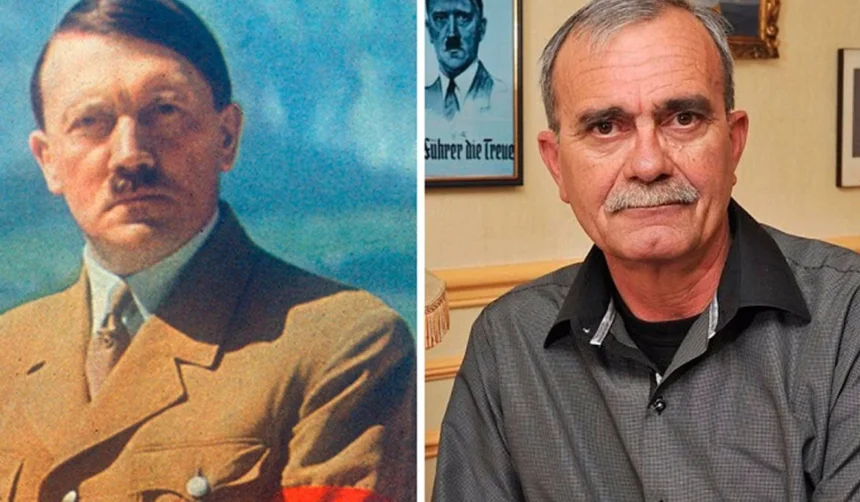
Most people never expect to find a shocking secret buried in their family history. For Philippe Loret, a French plumber, that shock came in the form of a claim that his grandfather was one of the most notorious figures in modern history — Adolf Hitler.
Loret’s story made international headlines and raised questions that are as much about science and history as they are about family. This article covers who Philippe Loret is, where the claim comes from, what DNA testing can and cannot prove, and what historians actually say about Hitler’s known family.
Who Philippe Loret Is
Philippe Loret is a French man who was identified by The Times as a plumber, aged 62 at the time of reporting. That is about as much confirmed public information as exists about him as a private individual.
He is not a celebrity in the usual sense. He did not become known for his career, his work, or any public role. He entered the public conversation entirely because of what he believes about his own family origins.
It is worth being clear: very little detailed biographical information about Loret is available from verified public sources. Speculating about his private life beyond what has been reported would not be appropriate or accurate. What is confirmed is his age at the time, his occupation, and the ancestry claim that brought him to media attention.
It is also worth noting that the name “Philippe Loret” is not unique. Genealogy databases like MyHeritage list over 200 records for that name, covering different individuals across different time periods and regions of France. The Loret surname appears in French records going back centuries, with many unrelated family branches. So finding a “Philippe Loret” on a genealogy platform does not automatically connect that person to this specific story.
The Claim — Charlotte Lobjoie and Hitler’s Time in France During WWI
The heart of Loret’s story rests on a belief passed down through his family. He says his grandmother, Charlotte Lobjoie, had a romantic relationship with Adolf Hitler while Hitler was serving as a lance corporal in France during World War I.
According to the claim, that relationship produced a child — making that child Hitler’s son, and Loret himself Hitler’s grandson.
It is important to be precise here: this is what Loret believes and what has been reported, not a confirmed historical fact. The story originates from family accounts passed through generations, not from independently verified historical documents.
That said, the basic historical backdrop is real. Hitler did serve as a soldier in France and Belgium during World War I. His movements during that period are documented. The idea that a soldier could have had contact with local women during wartime is not impossible on its face. But contact, even if proven, is a long way from proving a specific relationship or offspring.
Claims that Hitler may have fathered a child with a French woman have appeared in books and media beyond Loret’s specific case. His is simply one of the more publicly discussed versions of this broader narrative. The name Jean-Marie Loret, said to be the child from that alleged relationship, has appeared in wider media reporting on this topic, though those accounts are also disputed.
What the DNA Test Was Meant to Determine
Loret reportedly took a DNA test specifically to investigate whether a biological link to Hitler could be established. On the surface, that sounds like a straightforward way to get answers. In practice, it is far more complicated.
DNA testing can tell a person a great deal about their ethnic background and connect them to living relatives. But proving descent from a specific historical individual requires a reliable DNA sample from that person — or from confirmed close relatives of theirs.
In Hitler’s case, that is not a simple thing to arrange. There is no widely accepted, publicly available DNA profile for Adolf Hitler that living individuals can compare themselves against. Without that reference point, a DNA test can suggest ethnic heritage or connect you to other living relatives, but it cannot definitively confirm or deny descent from Hitler himself.
Think of it like someone claiming descent from a medieval king. They might have family stories, a relevant surname, and even a plausible geographic connection. But without reliable genetic material from the royal line to compare against, proof remains out of reach.
As of available public reporting, no widely accepted conclusive result has been published either confirming or disproving Loret’s claim. The absence of a clear result does not make the claim true or false. It simply reflects the genuine difficulty of this kind of genealogical investigation.
What Historians Say About Hitler’s Known Family and Descendants
To understand why Loret’s claim exists in uncertain territory, it helps to know what historians have actually established about Hitler’s family.
Mainstream historical scholarship holds that Hitler had no officially recognized children. He had siblings, and through them there were nieces and nephews, but no confirmed direct descendants.
Claims that Hitler fathered a child with a French woman during World War I are treated with caution by professional historians. They are neither universally accepted nor definitively disproven. Historians draw a careful line between what is supported by documented evidence and what appears only in personal testimonies or accounts written long after the fact.
Later testimonies can be unreliable for many reasons — memory fades, stories get shaped over time, and sometimes people have motivations that affect what they say. That does not mean every such account is false, but it does mean historians are rightly careful about accepting them without corroborating evidence.
So Loret’s claim sits in a genuine grey zone. It cannot be dismissed entirely, but it also cannot be accepted as fact. That ambiguity is exactly why the story continues to attract attention.
Why This Story Keeps Drawing Public Attention
There is something deeply human about wanting to understand where you come from. For most people, that search leads to ordinary family discoveries — a great-grandparent who emigrated, a branch of the family that changed its name, a relative no one talked about.
For Philippe Loret, the search led somewhere far more uncomfortable and far more public. Stories about possible hidden descendants of infamous historical figures have always attracted curiosity. They raise questions about identity, inheritance, and what — if anything — we carry from the people who came before us.
It is worth stating plainly: even if Loret’s claim were true, that would not make him responsible for anything Hitler did. Descendants do not inherit the moral weight of their ancestors’ actions. Loret did not choose his family history, and the empathetic reading of his story is that of a person trying to understand his own origins, not someone seeking to glorify a terrible figure.
The media interest in his story says more about our collective fascination with World War II and Hitler’s legacy than it does about Loret himself. Stories like his remind us how history can reach into ordinary lives in extraordinary ways.
For readers interested in well-researched stories that go beyond the headlines, CityBusinessView offers a range of profiles and features grounded in confirmed public information.
What Remains Unresolved
Philippe Loret’s claim remains exactly that — a claim. It is based on family stories about his grandmother Charlotte Lobjoie and her alleged wartime relationship with Hitler. A DNA test was taken, but no publicly confirmed, conclusive result has emerged from it.
Historians approach the broader question of Hitler’s possible offspring cautiously and have not endorsed accounts of a French child as established fact. The Loret surname is common in France, appearing across centuries and in many unrelated family lines, which adds another layer of complexity to any genealogical investigation.
What can be said with confidence is this: Philippe Loret is a private individual who found himself at the center of a very public question. The question itself — did Hitler have a child with a French woman during WWI? — remains historically open. And until reliable comparative DNA evidence or documented historical proof emerges, it is likely to stay that way.
For now, Loret’s story stands as a reminder that the lines between family memory, historical record, and provable fact can be very difficult to untangle — especially when the history in question is this significant.
Read Also: